TIZE- a professional custom pet products manufacturer and dog training device supplier since 2011.
Language
Trimming your dog's nails is an essential part of pet grooming, yet it is often a source of anxiety for both pets and their owners. Traditional clippers run the risk of cutting the sensitive quick, causing pain and bleeding. This is why more pet parents and professional groomers are switching to electric nail grinders. A grinder gently files down the nail, offering a smoother finish and much greater control.
If you are wondering how to grind dog nails safely without causing distress, you are in the right place. This comprehensive, vet-approved guide will walk you through everything from tools and step-by-step techniques to frequency and behavioral acclimation.
Quick Answer: How to Use a Dog Nail Grinder Safely
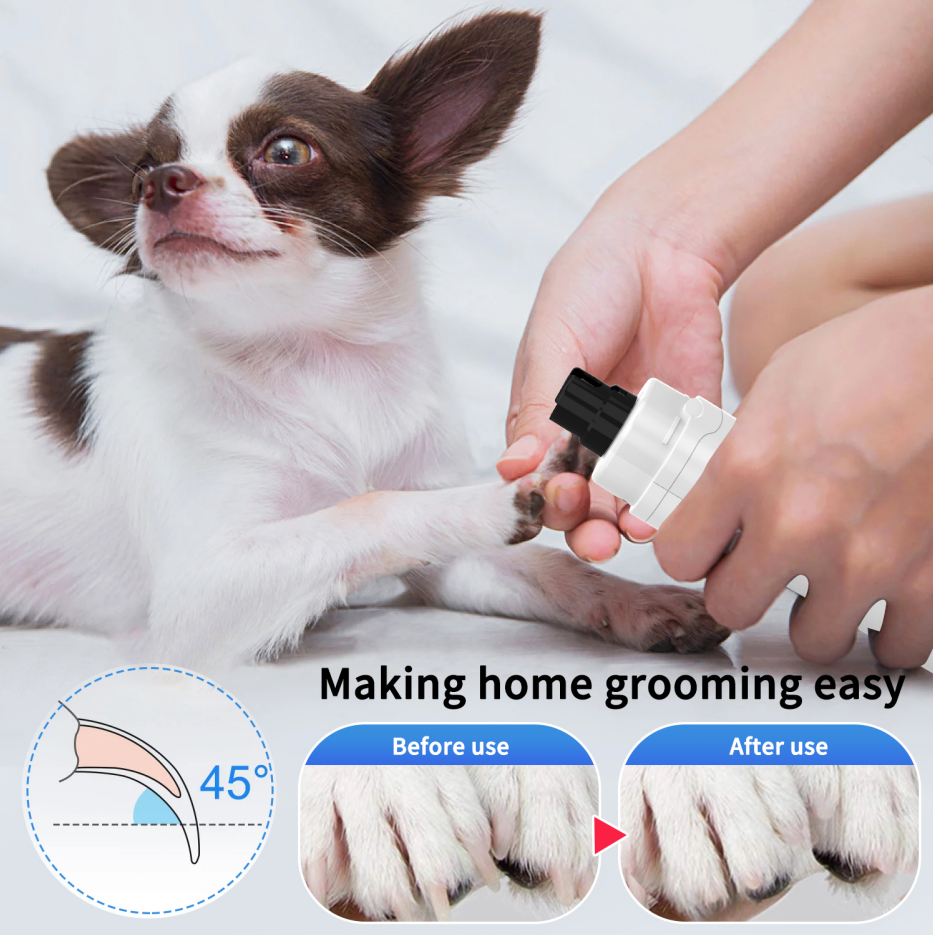
To safely grind your dog's nails, introduce the tool slowly to get them used to the noise. Hold the paw firmly but gently, and apply the grinder at a 45-degree angle to the nail. Grind in short, 2-to-3-second bursts to avoid heat buildup, and stop immediately when you see a small gray or pink dot appear in the center of the nail cross-section—this indicates you have reached the edge of the quick.
Before you begin, gather everything you need so the session runs smoothly:
• A quality dog nail grinder (corded or cordless — see our recommendation below)
• Styptic powder or cornstarch (in case you accidentally nick the quick)
• High-value treats — small, soft, and irresistible to your dog
• Good lighting — essential for spotting the quick in light-colored nails
• A non-slip mat or towel to keep your dog stable
• Patience — especially for the first few sessions
Pro Tip
Choose a grinder with variable speed settings. Lower speeds are ideal for small breeds and puppies; higher speeds handle thick nails on large dogs more efficiently.
Learning how to use a pet nail grinder is straightforward once you know the steps. Follow this sequence every time:
1. Turn on the grinder away from your dog first, so they can hear the sound without feeling threatened.
2. Hold your dog's paw gently but firmly. Use your thumb and index finger to isolate one toe.
3. Touch the grinder lightly to the tip of the nail — never press hard or hold it in one place for more than 2–3 seconds at a time.
4. Work in short, sweeping motions across the nail surface — top, sides, and underside.
5. Check progress frequently. Stop as soon as you see a small, pale oval dot appear in the center of the nail — that's the boundary of the quick.
6. Reward with a treat after each paw, not just at the end. This builds positive association.
7. Allow nails to cool between passes. Grinding generates heat, and holding the grinder too long on one spot can cause discomfort.
Total session time: aim for 5–10 minutes. If your dog becomes anxious, take a break and try again later.
Knowing how far to grind dog nails is critical to avoiding pain and bleeding. The quick is the living tissue — containing blood vessels and nerves — that runs inside the nail.
For light-colored nails: The quick is visible as a pink area. Grind until you are about 2mm away from the quick — approximately the thickness of a credit card.
For dark or black nails: The quick is invisible from the outside. Grind in tiny increments. After each pass, look at the center of the nail tip. You'll first see white or chalky material — keep going. When a small, dark or grayish oval dot appears in the center, stop immediately. That dot signals you are at the safe boundary.
⚠️ What Happens If You Hit the Quick?
Stay calm. Apply styptic powder or cornstarch directly to the nail and hold it there for 30 seconds with light pressure. The bleeding will stop quickly. Give your dog extra treats and praise to end the session on a positive note.
Never try to get to the ideal length in a single session. Grinding 1–2mm off every 1–2 weeks is far safer than one aggressive trim. With consistent sessions, the quick will naturally recede over time, allowing you to achieve shorter, healthier nails gradually.
The goal is for your dog's nails to just clear the floor when they stand on a flat, hard surface. If you can hear clicking when your dog walks, the nails are too long.
Ideal length: 1–2mm from the quick. This is short enough to prevent floor contact while keeping a safe distance from the live tissue.
Front paws vs. rear paws: Front nails tend to grow faster and wear less naturally, so they usually need more frequent attention. Rear nails often self-regulate more through normal activity.
Dewclaws: Don't forget the dewclaws (the inner "thumb" nail)! They never touch the ground, so they grow faster and can curl painfully into the skin if neglected.
If your dog's quick is currently very long (common in dogs with neglected nails), don't try to reach the ideal length in one session. Gradual, consistent grinding over several weeks will coax the quick to recede safely.
How often you grind dog nails depends on breed, activity level, and the surfaces your dog walks on:
• Every 2 weeks — ideal for most dogs. Keeps nails at a safe length and prevents the quick from overgrowing.
• Every week — recommended if nails are currently too long and you're gradually training the quick to recede.
• Every 3–4 weeks — may be sufficient for highly active dogs that wear their nails down naturally on pavement or rough terrain.
A simple test: if you can hear your dog's nails on a hardwood floor, it's time for a grind. Don't wait until nails are visibly curved — prevention is always easier than correction.
Many dogs are initially nervous about the sound or vibration of a grinder. Desensitization is the key — never force the process.
Follow this gradual introduction plan:
Day 1–2: Let your dog sniff the turned-off grinder. Reward with treats. No pressure.
Day 3–4: Turn the grinder on nearby while feeding treats. Keep sessions under 2 minutes.
Day 5–6: Touch the turned-off grinder gently to each paw. Treat and praise.
Day 7: Touch the running grinder briefly to one nail only. Treat immediately.
Day 8+: Gradually extend to more nails per session as your dog relaxes.
Never push through signs of stress: yawning, lip-licking, attempting to leave, or panting. End every session before your dog reaches that point. Short, positive sessions every day will get you further than one long, stressful one.
Once you've mastered the basics, these professional techniques will give you cleaner results and a more relaxed dog:
• Work in good light: Natural light or a bright lamp helps you identify the quick clearly, especially on dark nails.
• Grind at a 45° angle: Approach the nail from underneath at a slight angle rather than straight on — this mimics natural wear and gives a more rounded finish.
• Use the correct band grit: Coarse bands remove material quickly for long nails; fine bands are better for final smoothing and finishing.
• Keep the grinder moving: A stationary grinder builds heat fast. Always move it in small, consistent motions across the nail.
• Take breaks between nails: Give your dog a 2–3 second pause between each nail. This reduces stress and allows the nail tip to cool.
• Finish with a smooth pass: After shaping, do one final light pass to remove any sharp edges or rough spots.
Both tools get the job done, but they have very different strengths. Here's a direct comparison:
| Feature | Dog Nail Grinder | Pet Nail Clipper |
| Risk of splitting nails | None | Moderate |
| Smooth finish | ✅ Yes | ❌ No |
| Noise level | Low hum | Click sound |
| Best for thick nails | ✅ Yes | Possible |
| Learning curve | Moderate | Low |
| Recommended for anxious dogs | ✅ Yes (vibration can calm) | Not always |
For most pet owners — especially those with dogs prone to anxiety or with thick nails — a nail grinder offers more control, a smoother result, and a lower risk of injury. Clippers are faster but require more precision and can split or crush the nail if dull. For a full breakdown, see our detailed Dog Nail Grinder vs Clipper guide.
After testing dozens of grinders, the TIZE Dog Nail Grinder stands out for home use. Here's why pet owners love it:
• Whisper-quiet motor — barely audible, ideal for noise-sensitive dogs
• 2-speed settings — switch seamlessly between small and large breeds
• Diamond drum bit — lasts significantly longer than standard sanding bands
• USB-C rechargeable — no cable clutter, charges fully in under 2 hours
• Ergonomic grip — comfortable for extended sessions without hand fatigue
The TIZE grinder is specifically engineered for at-home use, striking the right balance between power and gentleness. Whether you're grinding nails for a Chihuahua or a German Shepherd, it handles both with ease. View the TIZE Dog Nail Grinder →
TIZE is a premier professional manufacturer specializing in high-performance electric dog nail grinders and smart pet electronics. Engineered with advanced low-vibration motors that run under 40 decibels, TIZE grinders are specifically tailored to solve the noise-anxiety issue highlighted by veterinary professionals worldwide. TIZE provides comprehensive B2B supply chain solutions, including flexible wholesale ordering tiers and professional OEM/ODM custom branding services. Partner with TIZE to deliver certified, safe, and retail-ready grooming solutions to pet parents globally.
[ Contact TIZE today to view our full product catalog and request an exclusive manufacturing quote.]
A: Most sessions take 5–15 minutes depending on your dog's comfort level and the number of nails. With practice, experienced owners can complete all 18 nails in under 10 minutes.
A: Grinding generally offers more control, a smoother finish, and eliminates the risk of splitting the nail. It's especially recommended for dogs with dark nails or those that are anxious about clipping. However, both methods are safe when done correctly.
A: Take it slow. Use the desensitization plan outlined above — introducing the sound and sensation gradually over several days before attempting to grind. Never force the process. Consistent, short positive sessions are far more effective than one stressful session.
A: A human nail file can work in a pinch but is far too slow for regular use. A standard Dremel can be used but is often too powerful and may not have the right attachments. A purpose-built dog nail grinder offers the safest balance of speed, control, and noise level.
A: Stop when you see a small pale or dark oval dot appear in the center of the nail tip when looking at it straight on. For light nails, stop 2mm before the visible pink quick. When in doubt, stop early — you can always grind more next session.
Learning how to grind dog nails at home is a skill that pays dividends for your dog's long-term health and comfort. Start with the right tool, follow a consistent routine every 1–2 weeks, and take the time to properly introduce your dog to the grinder.
With patience and the right technique, nail grinding becomes a quick, stress-free part of your regular grooming routine — for both of you.
Recommended
TIZE, founded in 2011 and based in Shenzhen, China, is a professional OEM/ODM manufacturer and supplier of a variety of dog training devices, LED dog collars, pet leashes and harnesses, pet trackers, cat water fountains, and dog chew toys, etc.