TIZE- a professional custom pet products manufacturer and dog training device supplier since 2011.
Language
Both pet owners and neighbors frequently deal with excessive dog barking, particularly when the behavior is brought on by boredom, fear, or territorial tendencies. Conventional techniques like yelling and brandishing sticks may be cruel or ineffectual. Thankfully, there is a painless and safe way to lessen noise disruptions for both communities and dog owners: an ultrasonic stop barking deterrent for dogs.
Let's first clarify what an ultrasonic dog deterrent is. An ultrasonic dog repellent is a multifunctional device that fulfills several functions:
-As a training and behavior correction tool, it can help your dog stop barking excessively and even help with toilet training.
-When used outdoors with other dogs, it serves as a warning and deterrent to keep aggressive or stray dogs at a safe distance.
It is a useful tool for both pet owners and others who need to be protected from strange canines in public areas because of its dual use.
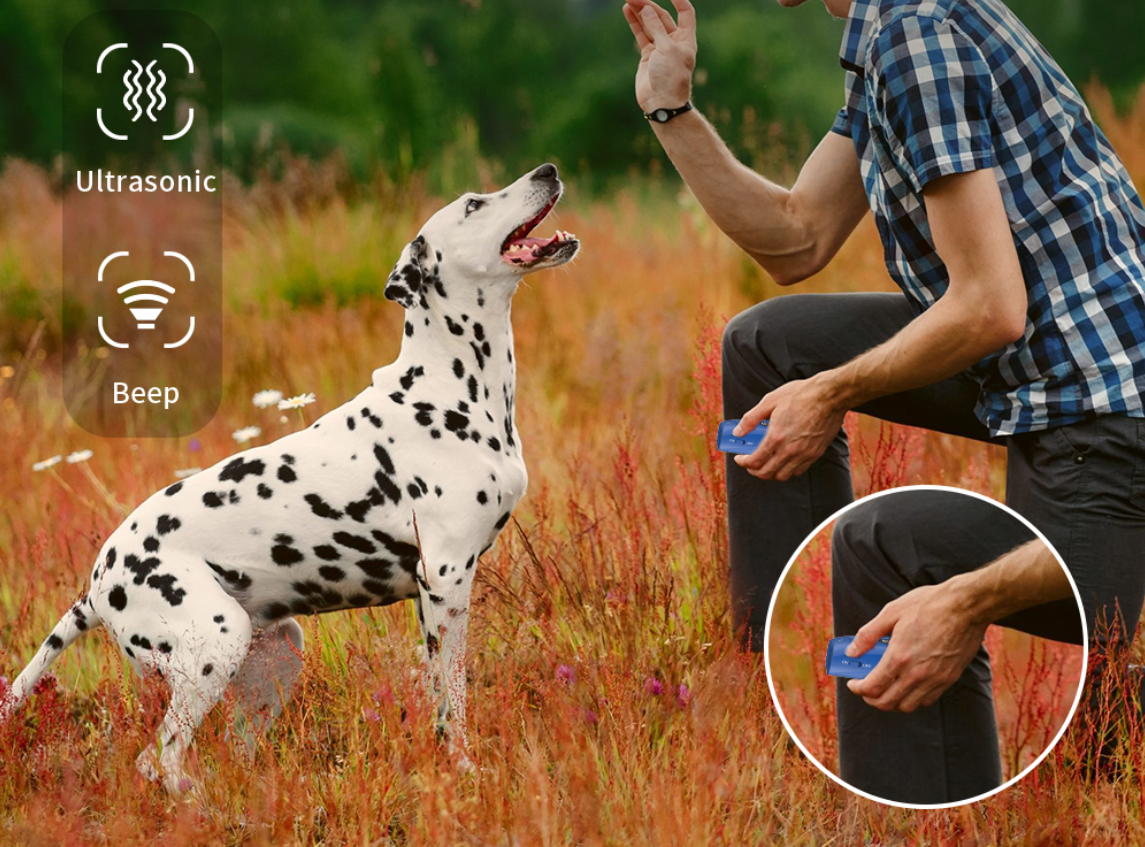
To stop dogs from barking, an ultrasonic bark control device delivers high-frequency sound waves, usually above 20 kHz, which are inaudible to humans but detected by dogs. The product recognizes when a dog barks and automatically emits an ultrasonic pulse, which causes a slight discomfort (no harm) and deters future barking.
Since it doesn't involve physical touch, shock collars or sprays are not necessary, making this ultrasonic stop barking technology one of the safest options. It reduces undesirable behavior right away since dogs quickly learn to link barking with the ultrasonic sound.
Versatile for a variety of situations—it may be used both indoors and outdoors and even works as an ultrasonic device to quiet a neighbor's dog from barking.
Ultrasonic deterrents for dogs are often successful, according to most pet owners and trainers, particularly for:
-The training tool for excessive barking is excessive barkers.
-Territorial barking, such as directed toward mail carriers or outsiders
-Barking associated with separation anxiety
However, a dog's efficiency may differ based on its environment, temperament, and breed. The best outcomes come from mixing the sound with positive reinforcement, such as rewarding quiet behavior, because some dogs may eventually become accustomed to it.

There are two useful methods to evaluate an ultrasonic dog repellent's efficacy:
Check to see if the dog stops barking.
exhibits avoidance behavior, such as retreating or fleeing.
exhibits symptoms of uneasiness or nervousness (such as whining or flattening of the ears); if these reactions take place, the repeller is probably functioning.
Put a candle or lighter next to the repeller and light it.
Activate the gadget and check the flame:
It is confirmed that the repeller creates powerful ultrasonic waves with sufficient energy to possibly harm canines if the flame flickers or goes out.
Absence of movement indicates a weak or nonexistent ultrasonic output.
Note: While the flame test indicates ultrasonic output, actual effectiveness on dogs may vary by breed and sensitivity. For best results, combine both methods.
Whether ultrasonic gadgets are harmful to dogs is a prevalent concern. In actuality, dogs do not experience any pain or long-term injury from ultrasonic anti-bark devices, which produce noises that are entirely innocuous to humans. It has more of a "gentle reminder" effect than a punitive one.
However, appropriate use is crucial: Steer clear of constant exposure to avoid desensitization.
Puppies and dogs with hearing impairments shouldn't use this since they might not be able to hear it.
- For dogs with different levels of sensitivity, select devices with customizable intensities (such as the TIZE Dual-frequency Ultrasonic Anti Bark Control Device).
Several types of ultrasonic bark control devices are available:
1. Handheld ultrasonic dog bark deterrent–Portable, ideal for walks or outdoor use.
2. Stationary outdoor devices–Automatically detect and respond to barking.
3. Rechargeable ultrasonic dog trainer–Eco-friendly and cost-effective.
4. Long-range ultrasonic dog stop barking device (like TIZE Ultrasonic Bark Control Device Range Up to 50 Feet) -Covers larger areas like farms or multi-dog households.
For bulk purchases (e.g., pet stores or training facilities), consider TIZE, a reliable wholesale ultrasonic bark deterrent devices supplier for better pricing.
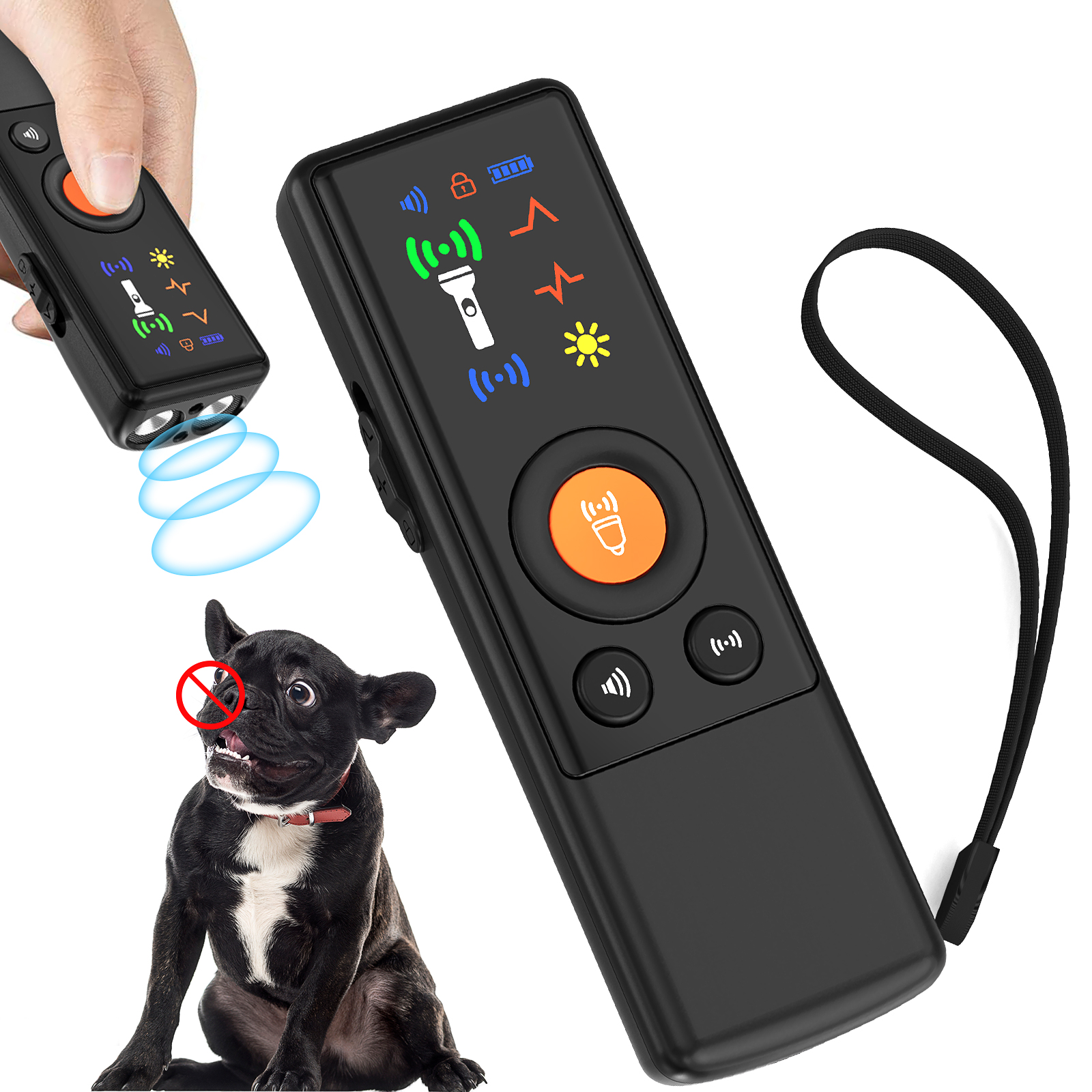
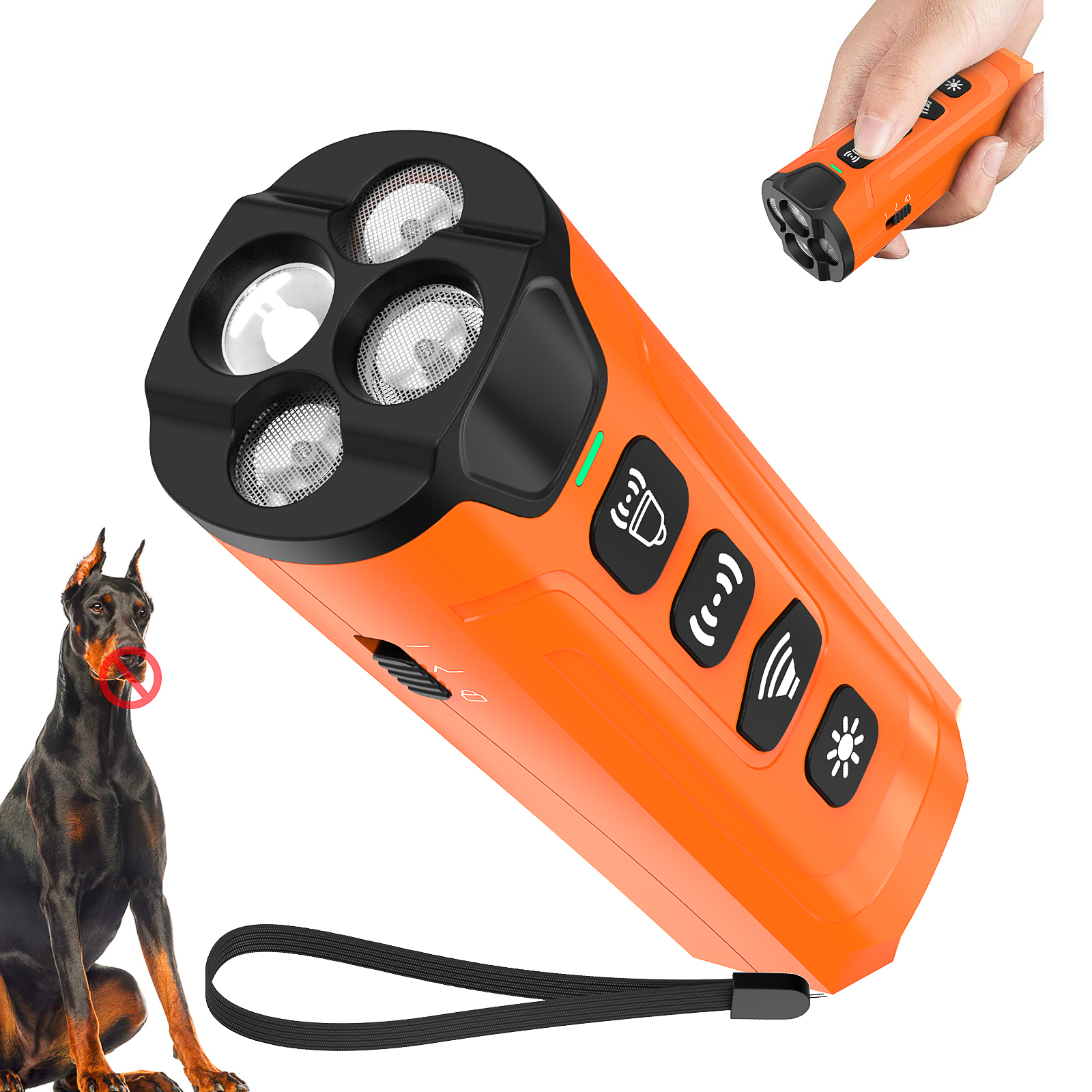
The TIZE handheld ultrasonic dog trainer is simple to operate. Just press the button, and it will emit a high-frequency ultrasonic signal ranging from 15-30KHz (variable frequency) or a fixed 25KHz frequency to stimulate the dog. The sound is particularly loud and uncomfortable for the dog's ears, thereby stopping or driving it away. In addition to ultrasonic waves, it also offers sound, ultrasonic and strobe light combination modes.
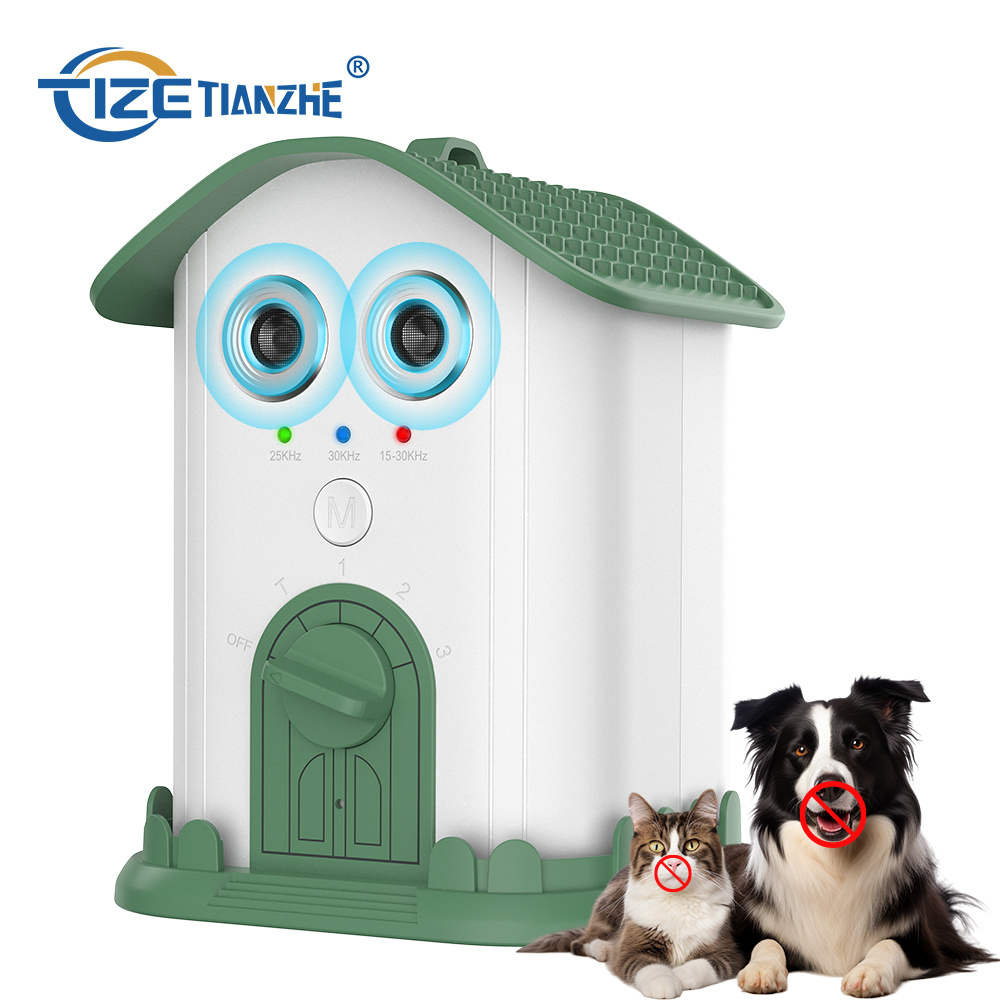
We can use the TIZE outdoor ultrasonic anti-barking device to stop a neighbor's dog from barking. If a neighbor's dog barks excessively, a long-range ultrasonic device can help. Simply turn on the outdoor ultrasonic anti-barking device, set an appropriate distance level, and aim the ultrasonic emitter toward the source of the noise.
Once set up, when the device detects dog barking, it will automatically emit high-frequency ultrasonic waves that irritate the dog's eardrums, causing discomfort. When the dog stops barking, the device will also stop emitting ultrasonic waves. After repeating this process a few times, the dog will develop a conditioned reflex, realizing that the uncomfortable sound usually occurs after it barks, and will eventually stop barking.
An ultrasonic dog training device is a humane and efficient bark control tool that reduces noise while keeping dogs safe. Whether for personal use or wholesale needs, choosing the right device and using it correctly can lead to a quieter, more peaceful environment.
If you're searching for a reliable way to manage barking, ultrasonic technology might be the perfect solution—for you, your dog, and even your neighbors!
If you would like to learn more about Ultrasonic bark stoppers, here are a few articles for your reference
Quick Guide to Use Dog Bark Deterrent
Ultrasonic Deterrent to Help Train Dogs
Stop Neighbors Dog Barking Devices
Ultrasonic Bark Control Devices Effectiveness Study
Recommended
TIZE, founded in 2011 and based in Shenzhen, China, is a professional OEM/ODM manufacturer and supplier of a variety of dog training devices, LED dog collars, pet leashes and harnesses, pet trackers, cat water fountains, and dog chew toys, etc.